


Comporta, where architecture thrives: from fishing village to contemporary villas
Once a hidden gem, Comporta has become one of Portugal’s most inspiring destinations. Between the dunes and the rice fields, a distinctive architectural style has emerged and is now being reimagined by some of the biggest names in design.


Comporta, where architecture thrives: from fishing village to contemporary villas
On the Alentejo coast, Comporta has always kept a low profile. Its endless sandy beaches, fragrant pine forests and rice fields that change colour with the seasons give the area an almost otherworldly poetry. People wander barefoot, get around by bike and live at the pace of the wind and the tides.
In the nineteen nineties, the Espírito Santo family, who owned almost the entire region, chose to protect this exceptional landscape while welcoming a creative community. Artists, architects and figures from around the world were drawn to its raw beauty. Their presence helped shape a distinctive architectural language, grounded in local tradition yet open to modernity.
The “Comporta Style”:
a spirit born from the fishermen’s huts
From fishing village to land of design
Before designers from around the world took an interest in it, Comporta was a fishermen’s territory, shaped by huts made of wood, reeds and thatched roofs. These modest shelters, built to withstand the climate and blend into the landscape, defined the first lines of the local style. Their simplicity and instinctive beauty later inspired the region’s contemporary architecture.
In the nineteen nineties, these huts began to change. The spirit of the original shelters remained, their modest scale, their direct link to nature and their absence of anything decorative, but they were given a more contemporary touch. Houses became white and filled with light. Gabled roofs appeared, echoing the silhouettes of Alentejo villages, and interiors took on a cleaner, more minimal look.
The charm comes from the light, the softness of natural materials and the attention given to craft. Over time, Comporta became a place of experimentation. Jacques Grange, who would later design Casa Montado, discovered the area and immediately connected with it. Other architects followed, creating houses that seem to rest gently on the sand, open to the breeze and bathed in calm light.
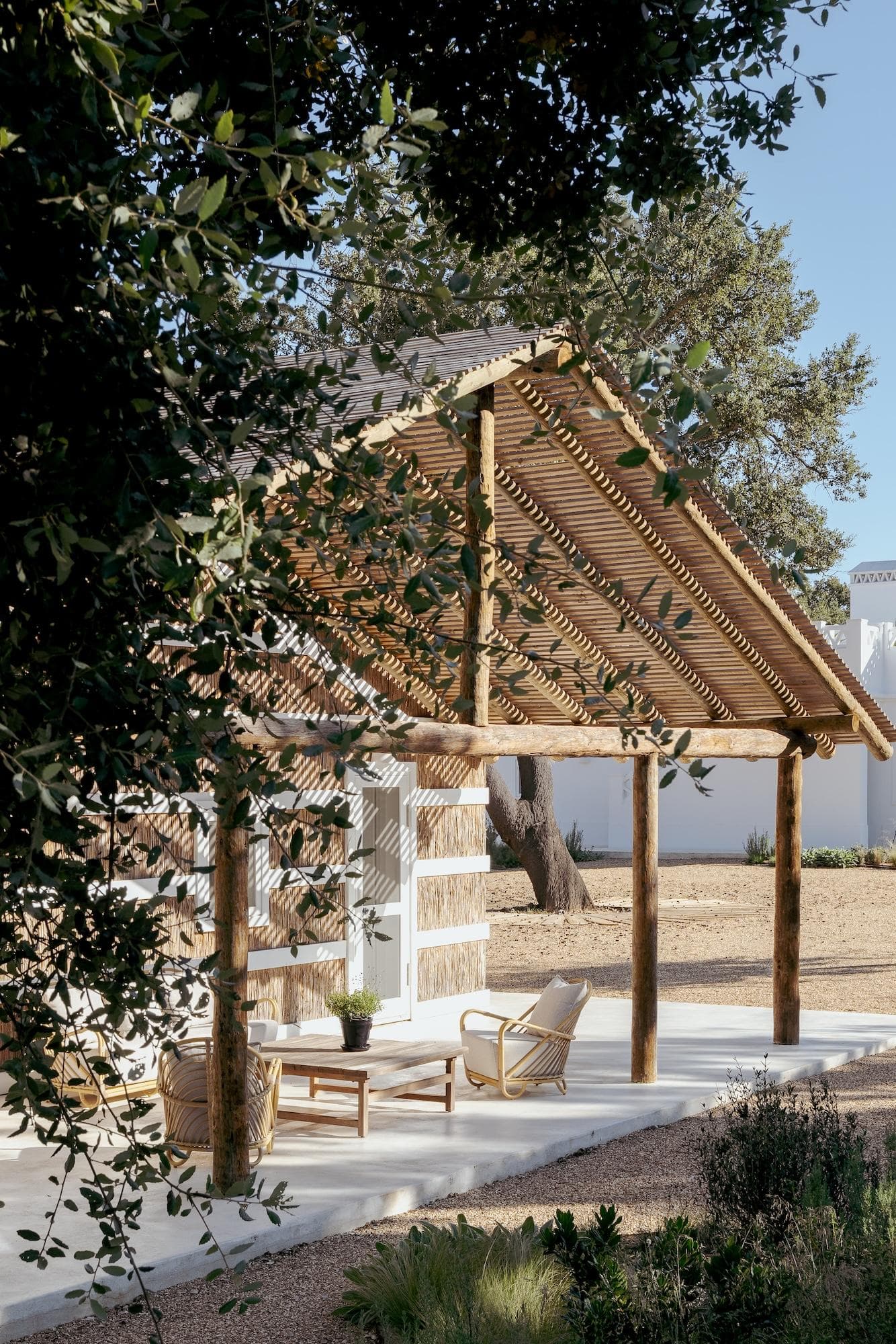
A glimpse of Casa Montado in the Alentejo. © Pedro Martinstavares
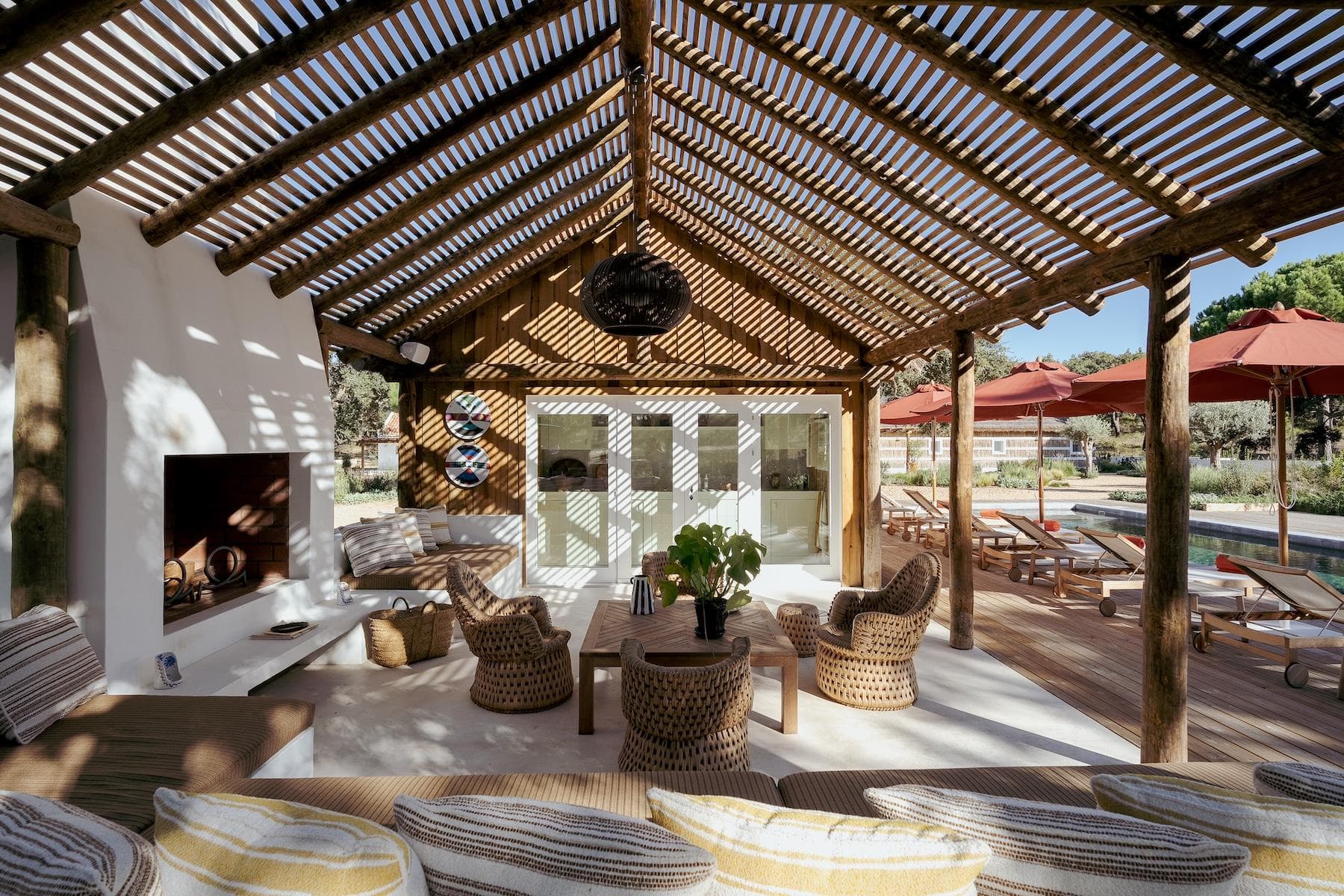
The shaded terrace of Casa Montado. © Pedro Martinstavares
A land of creativity
where nature reigns supreme
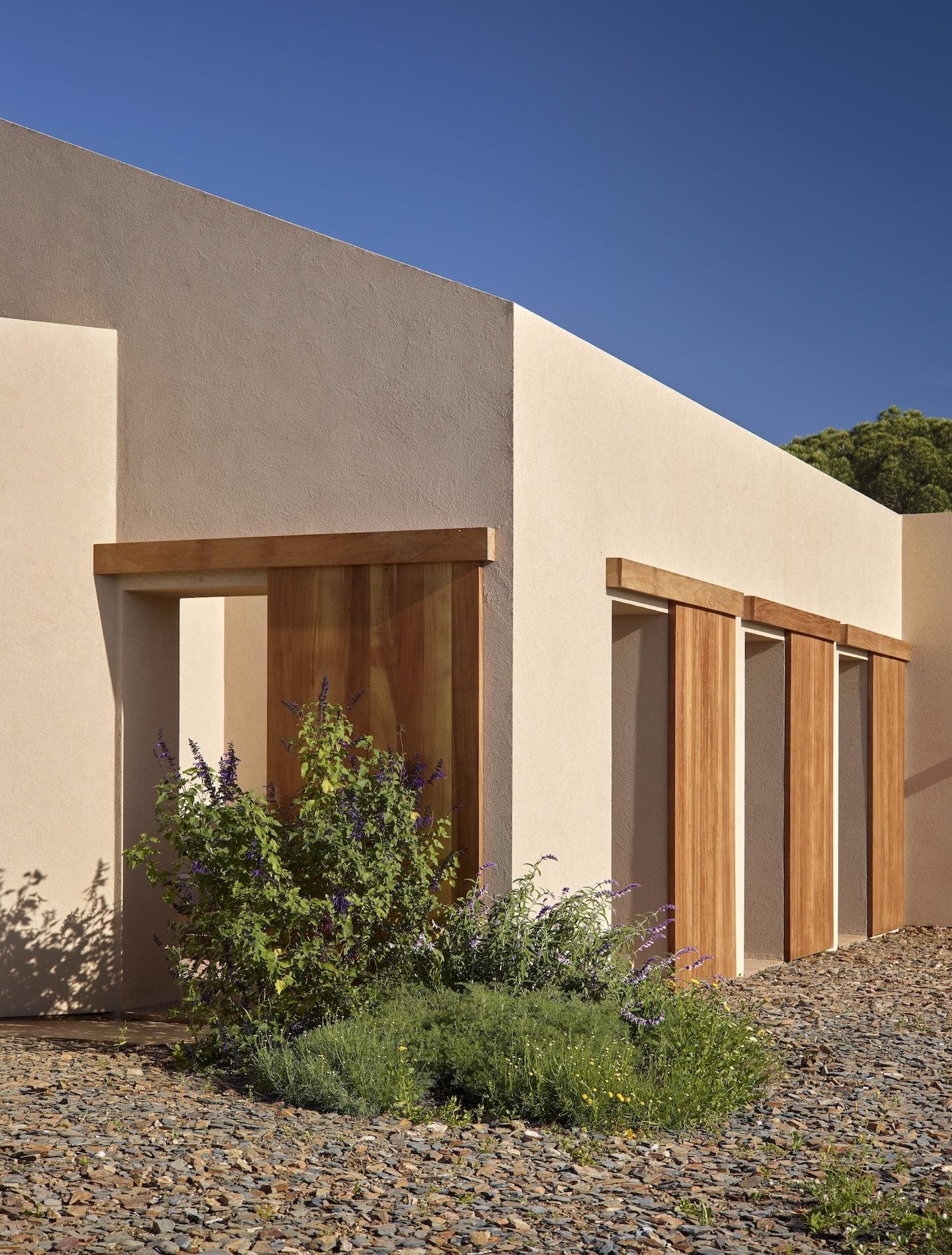
Welcome to Cá na Serra. © Jan Liergois
Cá na Serra: a contemporary retreat in the Alentejo
From the 2000s onwards, Comporta’s reputation began to spread beyond a small circle of insiders. Ambitious but measured projects started to appear. The new houses were not designed to stand out. They were created to slip into the dunes, hide behind the pine trees and let the landscape take the lead.
South of Comporta, in Melides, Cá na Serra captures this new architectural spirit. Its clean lines, confident angles and carefully managed transparency create a feeling of complete immersion in the landscape. Designed by architect Luís Perreira Miguel with Belgian interior designers Cathérine Hanssens and Michaël Severs, the house settles naturally into its surroundings.
Pura Comporta: a villa in harmony with its surroundings
At the heart of Praia do Pego, Pura Comporta reflects this philosophy with a light touch. Designed by João Pedro Falcão de Campos, the house sits on a plot that slopes toward the rice fields in the north and rises toward the dunes in the south. The project adapts to this natural shape. The house is slightly raised, following the incline of the land, which gives it wide views while keeping it sheltered from sight.
The architecture takes cues from traditional forms without copying them. Gabled roofs appear in sequence, giving movement to the main volume. The façades shift gently, creating small variations of light and shadow and offering different viewpoints inside. The white walls catch the Alentejo sun and underline the simple, clear lines of the building.

At Pura Comporta, the interior is as minimalist as the exterior. © Fernando Guerra
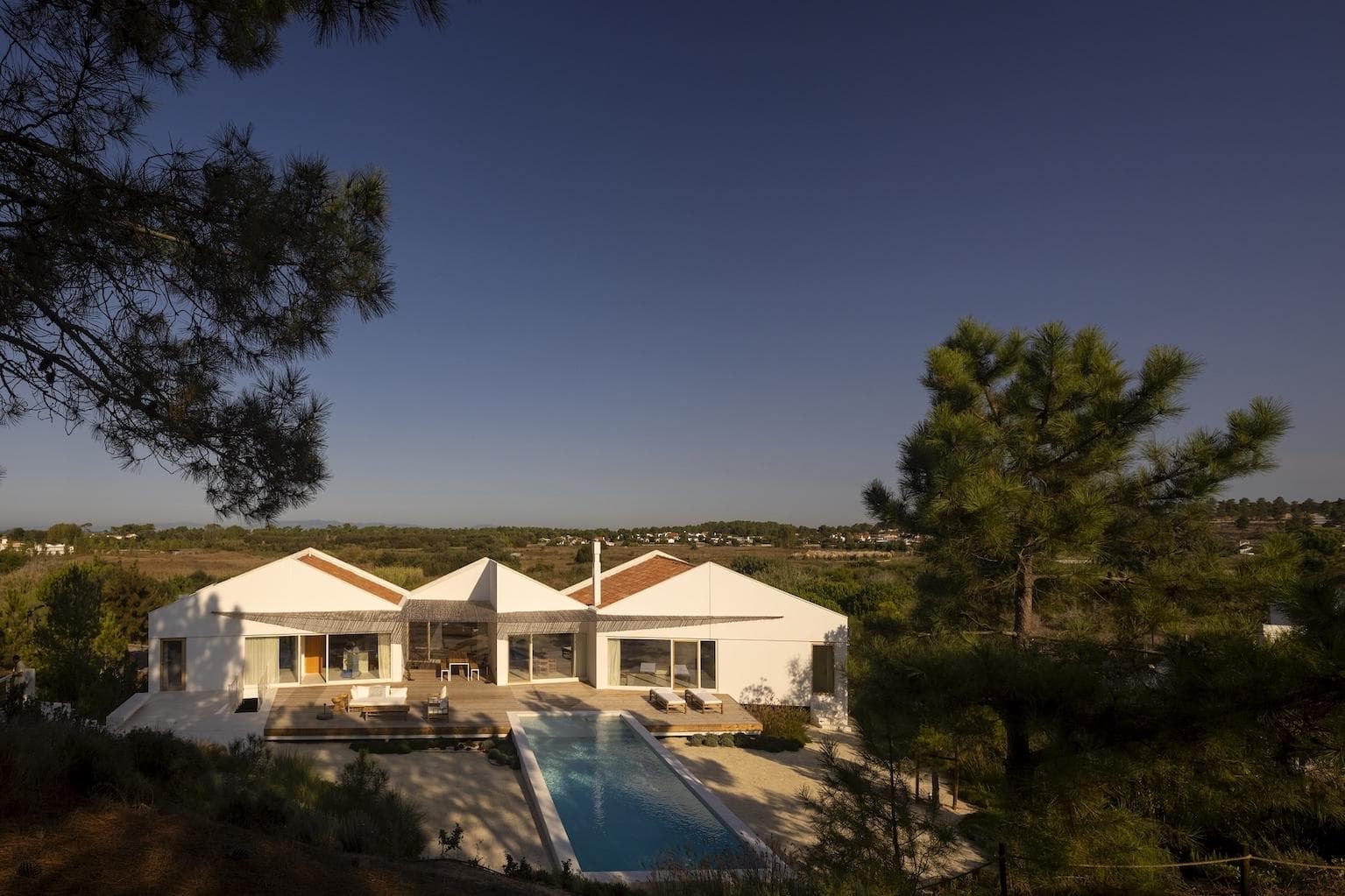
The white Pura Comporta stands out against Portugal’s blue sky. © Fernando Guerra
To the north, the three suites open onto a long wooden deck facing the rice fields, a quiet space where the light moves across the water. To the south, daily life unfolds on a large terrace shaded by a reed screen, a place made for long meals and unhurried moments in the breeze. A little further down, a pool that reaches toward the dunes frames the horizon, while the scent of pine fills the garden.
Inside, the layout creates a quiet conversation between the two sides of the plot. With each step, you catch either the wide green sweep of the rice fields or the warm, sheltered feel of the sandy garden. Everything appears simple, natural and easy. This is the true charm of Pura Comporta, a contemporary home that feels shaped by its setting, as if it could belong nowhere else.
An atmosphere
and a way of life
Despite its growing popularity, Comporta has held on to what makes it special. Life remains simple, close to nature, and guided by the landscape rather than by trends. What people call the Comporta style is really a way of living at a slower pace and letting the light shape the spaces.
Pura Comporta reflects this clearly. In this house, you see that architecture in the region is not about creating a look. It grows from the place itself and from the balance between local tradition, the land and contemporary needs.
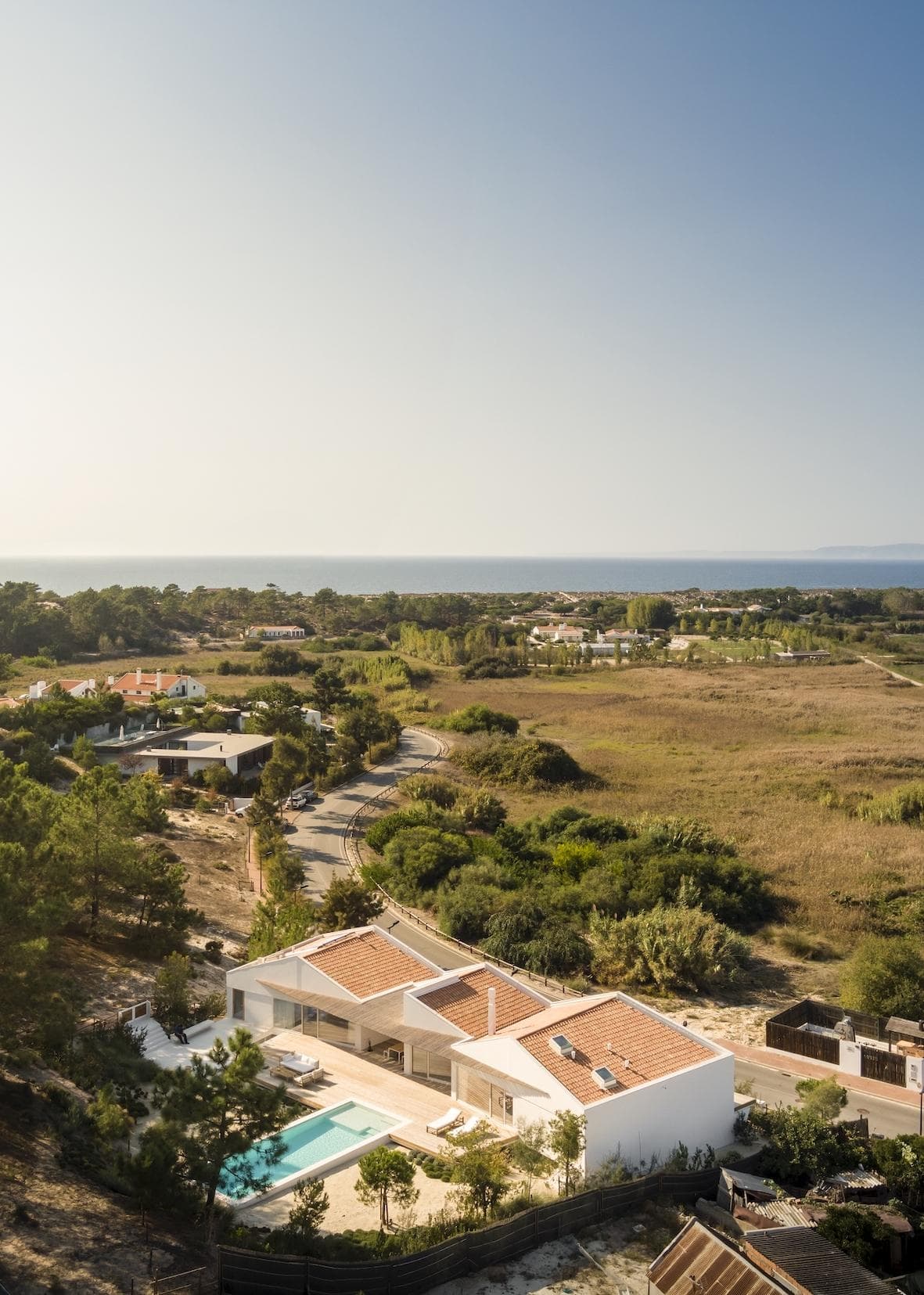
In the distance, the ocean can be glimpsed. © Fernando Guerra

Find your perfect house